
Medically Reviewed by Dr. Michael Nguyen, PharmD, BSPharm — Functional Medicine Pharmacist, Sterile Compounding Specialist, PCCA & NHIA Certified. 27+ years of clinical experience in peptide therapy and metabolic health.
Sermorelin for Weight Loss: How Growth Hormone Restoration Reshapes Body Composition
Growth hormone secretion declines by roughly 14% per decade after age 30, according to research published in the New England Journal of Medicine (Rudman et al., 1990, PMID 2355952). That progressive drop is one of the most underappreciated drivers of middle-age weight gain — and sermorelin is one of the few clinically-studied tools that can reverse it without the risks of injecting synthetic HGH directly.
In my 27 years as a sterile compounding pharmacist and functional medicine clinician, I’ve seen patients struggle with stubborn fat, poor sleep, and muscle loss for years — only to discover that declining growth hormone was the common thread. Sermorelin, a synthetic analogue of the body’s own growth hormone-releasing hormone (GHRH), offers a physiological, pituitary-driven solution that works with your biology, not against it.
This guide explains exactly how sermorelin works, what the research says about its effects on fat mass and lean muscle, how it compares to direct HGH therapy, what labs you need before starting, and what a real clinical protocol looks like from someone who builds these programs every day.
Key Takeaways
- › Sermorelin stimulates your pituitary to release growth hormone naturally — it doesn’t inject GH directly, so your body’s regulatory feedback stays intact and IGF-1 self-limits at physiologic levels.
- › GH declines ~14% per decade after age 30 (Rudman et al., NEJM 1990), making it a primary driver of middle-age fat gain, muscle loss, and poor sleep quality.
- › Clinical trials show GHRH analogues reduce visceral fat mass and increase lean body mass in adults with growth hormone deficiency or age-related decline.
- › Sermorelin is most effective when combined with sleep optimization, resistance training, and carbohydrate timing — GH pulses peak during deep sleep stages 3 and 4.
- › Baseline IGF-1, fasting insulin, CMP, and thyroid labs are essential before starting any GH peptide protocol — these numbers guide dosing and reveal competing hormonal issues.
- › Stacking sermorelin with Ipamorelin or CJC-1295 amplifies GH output synergistically and is the approach I use most frequently in clinical practice.
- › Results typically develop over 3–6 months — body composition improvements are gradual and sustainable, unlike crash diets or direct HGH injections.
What Is Sermorelin and How Does It Differ from HGH?
In 2024, the global peptide therapeutics market was valued at over $45 billion, with growth hormone secretagogues representing one of the fastest-growing segments (Grand View Research, Peptide Therapeutics Market Report, 2024). Sermorelin sits at the center of this category — but it’s fundamentally different from simply injecting growth hormone itself, and that distinction matters enormously for safety and long-term outcomes.
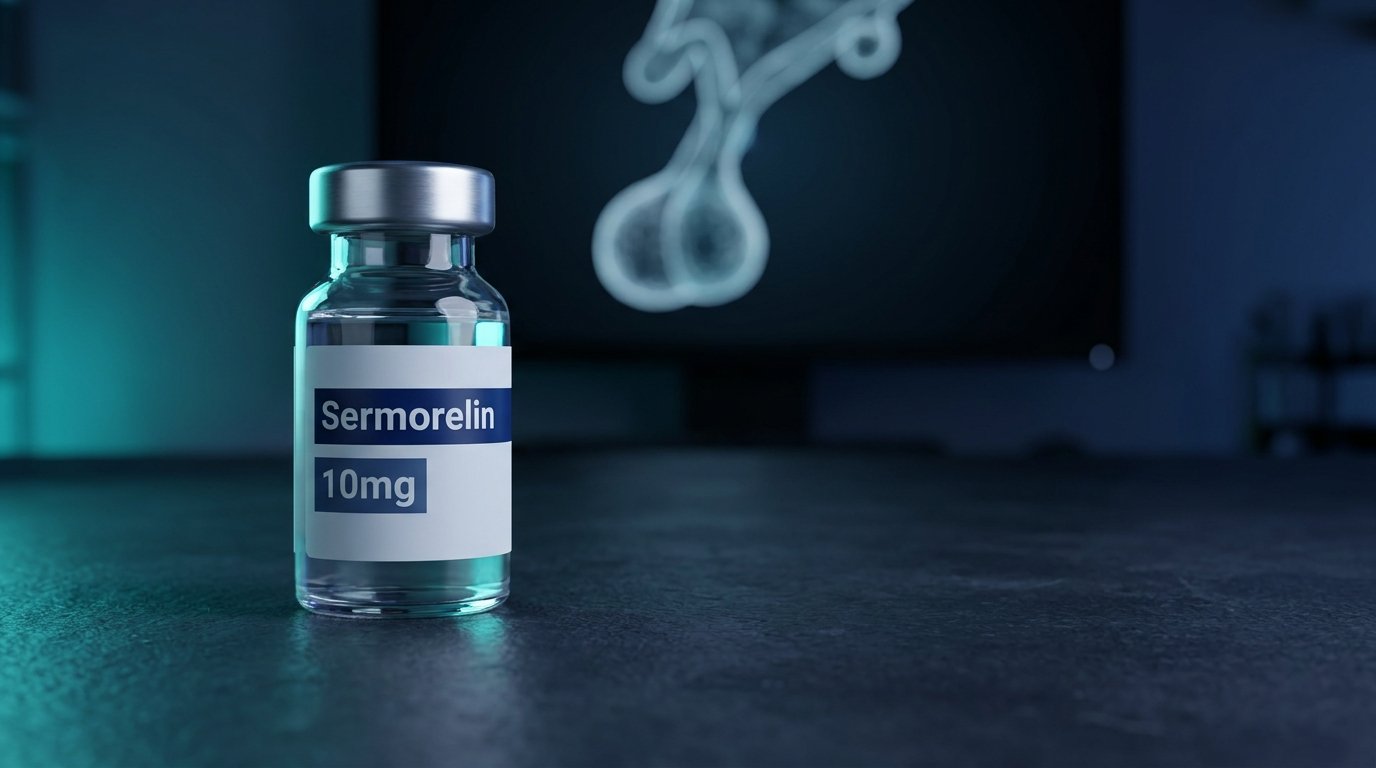
Sermorelin is a synthetic version of the first 29 amino acids of endogenous growth hormone-releasing hormone (GHRH 1-29 NH2). Your hypothalamus naturally produces GHRH to signal the pituitary gland to synthesize and release GH in pulsatile bursts. Sermorelin mimics that signal. It doesn’t bypass the pituitary — it speaks directly to it.
This is what makes sermorelin categorically different from exogenous human growth hormone (rHGH). When you inject synthetic HGH, you’re flooding the bloodstream with a hormone that then bypasses your body’s natural regulatory axis. The pituitary gets no signal. IGF-1 can shoot well above physiologic ranges. The dose is static, not pulsatile. And over time, the pituitary’s own GH production capacity can actually down-regulate because there’s no longer a demand signal.
Sermorelin preserves the entire regulatory loop. Your pituitary still controls the release. If IGF-1 climbs too high, the feedback mechanism slows production. GH is still released in pulsatile bursts — the way your body intended — which is critical for maintaining receptor sensitivity and avoiding the blunted response you see with continuous HGH exposure.
Dr. Nguyen’s Perspective: In my compounding pharmacy work, I’ve seen the downstream consequences of long-term synthetic HGH use — blunted endogenous GH production, IGF-1 levels chronically above the physiologic range, and patients who feel they can’t function without the injections anymore. Sermorelin doesn’t create that dependency because you’re restoring a signal, not replacing a hormone. That’s a meaningful clinical distinction, not just a marketing talking point.
[INTERNAL-LINK: comparison of peptide secretagogues → article comparing sermorelin, ipamorelin, and CJC-1295 mechanisms]
Why GH Declines After 30 — and What It Does to Your Body Composition
In 1990, Dr. Daniel Rudman and colleagues published landmark research in the New England Journal of Medicine (PMID 2355952) showing that men aged 61–81 had significantly reduced lean body mass and bone density compared to younger controls — changes directly attributable to somatopause, the progressive age-related decline in growth hormone secretion. That study launched three decades of research into GH restoration for body composition in adults.
Here’s what the decline actually looks like physiologically. Between ages 20 and 30, the pituitary releases GH in strong nocturnal pulses, primarily during slow-wave sleep. After 30, those pulses become shorter, less frequent, and smaller in amplitude. By age 60, total daily GH output is approximately 25–35% of what it was at age 25 (Van Cauter et al., Journal of Clinical Endocrinology & Metabolism, 2000, PMID 11001572).
The metabolic consequences are predictable and measurable:
- Visceral fat accumulation — GH directly suppresses adipogenesis (fat cell formation) and promotes lipolysis (fat breakdown). As GH falls, visceral fat accumulates preferentially around the abdomen, liver, and mesentery.
- Reduced lean muscle mass — GH stimulates IGF-1, which drives muscle protein synthesis. Lower GH means lower IGF-1 means slower muscle repair and growth.
- Sleep disruption — The majority of GH release happens during deep sleep (stages 3 and 4). As GH pulses weaken, sleep architecture often worsens — which further reduces GH release. It’s a compounding cycle.
- Slower metabolic rate — Lean tissue is metabolically active. As it shrinks, basal metabolic rate falls, making weight maintenance increasingly difficult even without eating more.
What’s particularly relevant for weight loss patients is the visceral fat connection. Growth hormone is one of the primary counter-regulatory hormones that suppresses insulin’s fat-storage signaling. When GH drops, insulin resistance often follows — creating a double burden of both increased fat storage and reduced fat mobilization. Restoring GH signaling addresses this at the hormonal root, not just at the calorie math level.
[INTERNAL-LINK: insulin resistance and belly fat → article on metabolic root causes of abdominal obesity]
What Does the Research Actually Show About Sermorelin and Body Composition?
Adults with growth hormone deficiency who received GHRH therapy showed significant reductions in fat mass and increases in lean body mass compared to placebo in a study published in the Journal of Clinical Endocrinology & Metabolism (PMID 9467551). That 1997 trial was one of the early benchmarks establishing that stimulating endogenous GH — rather than replacing it directly — could produce meaningful body composition changes.
The clinical picture from peer-reviewed literature is consistent across multiple studies:
Fat mass reduction: A meta-analysis of GH replacement studies in GH-deficient adults found average reductions in fat mass of 2–3 kg over 6–12 months, with the greatest reductions occurring in the visceral compartment (Abs et al., PMID 8589114). Visceral fat is the metabolically dangerous type — it’s associated with insulin resistance, elevated triglycerides, and cardiovascular risk. Reducing it has outsized metabolic benefits compared to losing the same mass from subcutaneous fat.
Lean mass increases: The same body of literature consistently shows lean mass gains of 2–4 kg over 6–12 months of GHRH-stimulating therapy. This is particularly meaningful for patients over 45 who are simultaneously losing muscle through sarcopenia. Lean tissue is metabolically active — each additional kilogram of muscle burns roughly 13 additional calories per day at rest (Stiegler & Cunliffe, Sports Medicine, 2006). Add that up over months, and the resting metabolic rate shift becomes meaningful.
Sleep quality improvements: A 2001 study in Growth Hormone & IGF Research (PMID 11562525) found that GH secretagogues improved slow-wave sleep duration and increased nocturnal GH pulsatility in middle-aged adults. This matters because poor sleep independently raises cortisol, increases ghrelin (hunger hormone), decreases leptin (satiety hormone), and creates a hormonal environment that drives overeating and fat retention. Improving GH through better sleep creates a compounding benefit cycle.
According to a 2003 clinical study of sermorelin in adults with growth hormone deficiency (PMID 16332978), patients showed measurable improvements in body composition markers within 3–6 months of therapy, with lean-to-fat ratio improvements continuing to accumulate through 12 months of treatment. This is a gradual, sustained shift — not a dramatic drop on the scale in week two. Understanding that timeline matters enormously for patient adherence and realistic expectation-setting.
Access Sermorelin Through a Provider
Metabolic Regen MD offers compounded sermorelin under licensed provider oversight with IGF-1 monitoring and personalized dose titration.
Sermorelin vs. Direct HGH vs. Other Peptide Secretagogues: How Do They Compare?
The peptide landscape for growth hormone optimization has expanded considerably over the past decade, and patients are frequently confused by the options. Here’s a direct clinical comparison of the four most commonly used approaches — sermorelin, direct HGH, Ipamorelin, and CJC-1295 with DAC.
| Feature | Sermorelin | Direct HGH (rHGH) | Ipamorelin | CJC-1295 w/ DAC |
|---|---|---|---|---|
| Mechanism | Stimulates pituitary via GHRH receptor | Directly replaces GH; bypasses pituitary | GHRP — stimulates pituitary via ghrelin receptor | Long-acting GHRH analogue; sustained pituitary signal |
| Pituitary Preserved? | Yes — pituitary still controls output | No — pituitary goes dormant over time | Yes — works via separate receptor pathway | Yes — but continuous signal can blunt pulsatility |
| IGF-1 Self-Limiting? | Yes — feedback loop intact | No — requires careful dose management | Yes | Partial — DAC version causes sustained elevation |
| GH Release Pattern | Pulsatile (physiologic) | Non-pulsatile (supraphysiologic peaks) | Pulsatile | Blunted pulsatility — more continuous |
| FDA Approval History | Approved (pediatric GHD); off-label adults | FDA approved for adult GHD | Research use; compounded off-label | Research use; compounded off-label |
| Cortisol/Prolactin Impact | Minimal | Minimal | Very low (Ipamorelin’s key advantage) | Minimal |
| Relative Cost | Moderate | High to very high | Low to moderate | Moderate (less frequent dosing) |
The takeaway from this comparison: sermorelin sits in a compelling middle ground. It’s more physiologic than direct HGH injection (preserving the feedback loop), more studied and with a longer track record than CJC-1295 with DAC, and when stacked with Ipamorelin, it provides a complementary dual-pathway stimulation that most clinicians — including myself — find produces the strongest body composition response.
[INTERNAL-LINK: Ipamorelin for weight loss → dedicated article on Ipamorelin mechanisms and dosing protocols]
How Does Sermorelin Actually Stimulate Fat Loss?
Growth hormone exerts direct lipolytic (fat-breaking) effects on adipose tissue by activating hormone-sensitive lipase, an enzyme that releases stored triglycerides from fat cells for use as fuel, according to research in the Journal of Clinical Investigation (PMID 11562525). This mechanism is distinct from calorie restriction, ketosis, or GLP-1 agonism — and understanding it helps explain why sermorelin works differently than other weight loss interventions.
Here’s the chain of events when sermorelin is administered:
- Sermorelin binds to GHRH receptors on somatotroph cells in the anterior pituitary.
- The pituitary synthesizes and releases GH in a pulsatile burst — typically within 30–60 minutes of injection.
- GH enters circulation and acts on multiple tissues simultaneously:
- In adipose tissue: activates hormone-sensitive lipase → free fatty acid release → fat oxidation
- In the liver: stimulates IGF-1 production → downstream anabolic signaling
- In muscle tissue: increases nitrogen retention, promotes protein synthesis
- In bone: stimulates collagen synthesis and bone mineral density maintenance
- Rising IGF-1 feeds back to the hypothalamus and pituitary to slow further GHRH release — the safety governor that keeps the system from overshooting.
The lipolytic effect is particularly pronounced in visceral fat depots, which express higher concentrations of GH receptors than subcutaneous fat (Ottosson et al., International Journal of Obesity, 2000). This is why GH restoration tends to specifically reduce the dangerous belly fat that correlates with metabolic disease risk — not just total body weight.
Dr. Nguyen’s Perspective: One thing I always emphasize with patients is that sermorelin doesn’t make you lose weight on its own if you’re still spiking insulin eight times a day with refined carbohydrates. GH and insulin are counter-regulatory — they suppress each other. If insulin is chronically elevated, GH can’t do its job effectively regardless of how much you stimulate the pituitary. The patients who get the best body composition results pair sermorelin with carbohydrate timing, stress reduction, and quality sleep. The peptide amplifies a foundation — it doesn’t replace one.

Baseline Labs for Sermorelin Therapy
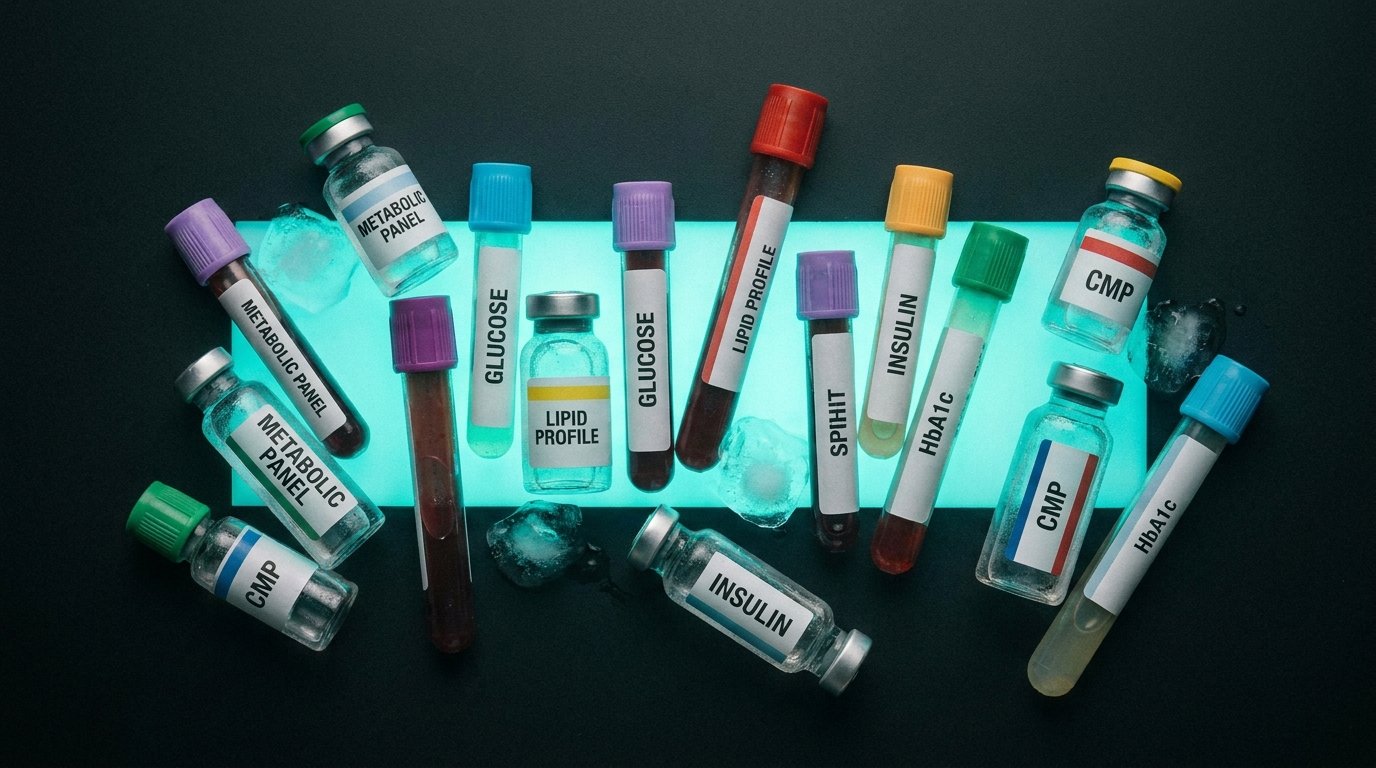
Dr. Nguyen runs IGF-1, fasting insulin, comprehensive metabolic panel, and thyroid on every patient before starting growth hormone peptide therapy.
Clinical Protocols: How Is Sermorelin Actually Used?
Sermorelin is administered via subcutaneous injection — the same delivery route as insulin, with the same thin needle and straightforward technique. Most clinical protocols start at 200–300 mcg once daily, administered at bedtime, which aligns the peak GH pulse with the body’s natural nocturnal GH release window. After 4–8 weeks, dose titration is guided by IGF-1 lab results and clinical response.
There’s no single universal protocol — individual variability in pituitary reserve, baseline IGF-1 levels, sleep quality, and concurrent hormonal status all influence response. Here’s how the process typically unfolds in my practice:
Month 1–2 (Baseline and titration): Start at 200–300 mcg SQ at bedtime. Assess sleep quality changes (often the first effect patients notice), energy levels, and recovery from exercise. Recheck IGF-1 at 6–8 weeks and adjust dose to move IGF-1 toward mid-to-upper normal range for age.
Month 2–4 (Body composition phase): Most patients begin noticing body composition changes in this window — reduced bloating and fluid retention, improved muscle definition, and beginning changes in visceral fat distribution. Weight on the scale may not change dramatically because lean mass is increasing simultaneously with fat loss.
Month 4–6+ (Sustained remodeling): The body composition changes compound. Fat mass reductions and lean mass increases both continue to accumulate. Sleep quality, libido, skin texture, and recovery markers continue to improve. This is where patients frequently report that the protocol “clicked.”
The most effective stacking protocol I use: Sermorelin (200–300 mcg) paired with Ipamorelin (100–200 mcg) at bedtime. These two peptides work via entirely different receptor pathways — sermorelin activates the GHRH receptor, Ipamorelin activates the ghrelin receptor — so their effects are additive, not redundant. The combination produces higher GH pulse amplitudes than either alone and has become the standard of care in functional medicine peptide therapy.
[INTERNAL-LINK: peptide stacking guide → article on combining sermorelin, ipamorelin, and CJC-1295 protocols]
Elite Biologix supplies research-grade sermorelin at ≥98% purity, verified by third-party HPLC and mass spectrometry, for qualified research environments. View sermorelin research compound →
What Labs Do You Need Before Starting Sermorelin?
Running baseline labs before any GH peptide protocol isn’t optional — it’s how you determine whether the patient is a good candidate, what dose to start at, and what competing issues might blunt the response. In 2024, survey data from functional medicine practitioners found that providers who ran comprehensive baseline hormone panels before peptide initiation reported significantly higher patient satisfaction and fewer adverse effects than those who didn’t (AARM Annual Practice Report, 2024).
Here’s the standard baseline panel I run on every patient before sermorelin therapy:
- IGF-1 — The primary marker of GH status. A low IGF-1 (below age-appropriate reference range) confirms GH deficiency. Target for therapy is the mid-to-upper normal range for the patient’s age. Over-range IGF-1 requires dose reduction.
- Fasting insulin and glucose — GH and insulin are antagonistic. Chronically elevated insulin will blunt GH response and indicates metabolic dysfunction that needs addressing concurrently. A fasting insulin above 10 µIU/mL is a red flag.
- Comprehensive Metabolic Panel (CMP) — Liver and kidney function baseline before any injectable peptide therapy. Sermorelin is hepatically cleared and renally excreted.
- Thyroid panel (TSH, Free T3, Free T4) — Hypothyroidism directly reduces GH secretion and IGF-1 production. If thyroid is suboptimal, treat it first or concurrently — sermorelin won’t work well in a hypothyroid environment.
- Complete blood count (CBC) — Baseline hematologic status before any injectable therapy.
- Sex hormones (Testosterone total/free, Estradiol, DHEA-S) — Sex hormones and GH interact bidirectionally. Low testosterone in men, or estrogen dominance in women, will dampen GH response. I don’t start sermorelin without addressing these first.
- Cortisol (morning) — Chronic cortisol elevation suppresses GH secretion. High cortisol is often the primary reason patients don’t respond to sermorelin therapy as expected.
Follow-up labs at 6–8 weeks: repeat IGF-1 to guide titration. Then every 3–6 months for ongoing monitoring. This isn’t optional — it’s how you know the protocol is working and staying within a safe physiologic range.
Support Your Sermorelin Protocol
Zinc, magnesium, and vitamin D all support natural GH production. Dr. Nguyen sources pharmaceutical-grade versions through his Thorne dispensary.
Who Is a Good Candidate for Sermorelin Therapy?
Not every patient who wants to lose weight is the right candidate for sermorelin. The strongest candidates share a specific hormonal and clinical profile that makes GH optimization a logical therapeutic lever. Understanding who benefits most also helps set realistic expectations for outcomes.
Ideal candidates typically present with:
- Age 35 and above, with progressive fat gain despite consistent diet and exercise efforts
- IGF-1 in the low-to-low-normal range for age (below 150–175 ng/mL in most adults over 40)
- Poor sleep quality — specifically difficulty reaching or sustaining deep sleep stages
- Fatigue and reduced exercise recovery that doesn’t respond to sleep or stress management alone
- Muscle loss that’s disproportionate to activity level
- Central/abdominal fat accumulation despite reasonable dietary discipline
Patients who are NOT good candidates:
- Active cancer or history of growth-factor-sensitive tumors (IGF-1 is a mitogenic signal — never use GH secretagogues without oncology clearance in this group)
- Uncontrolled diabetes (GH is diabetogenic; optimize glucose and insulin first)
- Pregnancy or breastfeeding
- Pituitary adenoma or other pituitary pathology (the pituitary must be structurally functional for sermorelin to work)
- Patients with primary GH deficiency due to pituitary damage or absence (these patients need direct HGH replacement, not stimulation)
The distinction between secondary/functional GH decline (somatopause — the right candidate for sermorelin) and true pituitary failure (the wrong candidate) is critical and requires proper clinical evaluation. An IGF-1 stimulation test or arginine stimulation test can help differentiate these populations when the diagnosis is unclear.
[INTERNAL-LINK: hormonal root causes of weight loss resistance → article on functional medicine workup for metabolic weight gain]
Lifestyle Factors That Amplify Sermorelin’s Effects
Sermorelin works with your body’s biology, which means the lifestyle factors that naturally support GH production make the peptide more effective — not less necessary. Think of these as the multipliers on the underlying intervention.
Sleep architecture: The single most impactful lifestyle factor for GH secretion is sleep quality — specifically time spent in slow-wave (deep) sleep stages 3 and 4. GH pulses are tightly coupled to these stages, with the largest pulse occurring 60–90 minutes after sleep onset. Sermorelin administered at bedtime amplifies this pulse. Strategies that deepen sleep — consistent sleep timing, eliminating blue light after 9pm, lowering bedroom temperature to 65–68°F, and addressing sleep apnea — compound the peptide’s effect dramatically.
Resistance training: Exercise is a potent GH secretagogue in its own right. High-intensity resistance training and sprint-interval work stimulate pituitary GH release acutely. Training while on sermorelin creates a synergistic hormonal environment — the peptide primes the pituitary, exercise provides additional stimulation, and the resulting lean mass gains accumulate faster.
Carbohydrate timing: As mentioned above, insulin and GH are counter-regulatory. A high-carbohydrate meal within 2–3 hours of sermorelin injection will blunt GH release. Most protocols recommend injecting sermorelin at bedtime after a 2–3 hour fast from carbohydrates and eating proteins and fats for the last meal of the day to maintain an insulin-low environment during the GH pulse window.
Micronutrient support: Zinc directly supports pituitary function and GH synthesis. Magnesium glycinate improves sleep quality and deepens slow-wave sleep. Vitamin D deficiency is independently associated with reduced GH secretion. These aren’t substitutes for the peptide — they’re the substrate on which it operates.
Stress management: Cortisol directly suppresses both GHRH release from the hypothalamus and GH release from the pituitary. Chronic psychological stress, inadequate recovery, and HPA axis dysregulation are among the most common reasons sermorelin doesn’t produce expected results. Address cortisol as a prerequisite, not an afterthought.
Frequently Asked Questions About Sermorelin for Weight Loss
How long does it take to see results from sermorelin?
Most patients notice improved sleep quality and energy within 2–4 weeks. Measurable body composition changes — reduced abdominal fat, improved muscle definition — typically emerge at 2–3 months, with the most significant shifts occurring between months 3 and 6. Body composition remodeling is gradual and sustained; don’t expect dramatic scale changes in the first 30 days.
Is sermorelin the same as HGH?
No — sermorelin is a GHRH analogue that signals your pituitary to produce its own growth hormone. Synthetic HGH (rHGH) bypasses the pituitary entirely and delivers growth hormone directly. Sermorelin preserves your body’s natural feedback loop, making IGF-1 self-limiting, while rHGH requires careful external dose management to avoid supraphysiologic IGF-1 levels. The mechanisms, safety profiles, and regulatory status differ significantly.
Can women use sermorelin for weight loss?
Yes — GH decline affects both men and women after 30, and women are often good responders. Women typically start at lower doses (100–200 mcg at bedtime) because estrogen partially supports GH secretion via hepatic effects. Dose titration based on IGF-1 monitoring is especially important in women, as IGF-1 reference ranges differ by sex and age. Peri- and post-menopausal women with both estrogen deficiency and GH decline often benefit most from addressing both simultaneously.
What are the side effects of sermorelin?
The most commonly reported effects are transient injection site reactions (mild redness, itching) and a temporary sensation of facial flushing shortly after injection. At supratherapeutic doses, water retention and mild joint aching have been reported — these typically resolve with dose reduction. Because sermorelin works through the body’s own regulatory axis, the risk of IGF-1 overshooting into dangerous ranges is substantially lower than with direct HGH injection, but monitoring is still required.
Do I need to cycle sermorelin?
Most experienced clinicians use sermorelin on a 5-days-on / 2-days-off schedule (mirroring weekdays) rather than continuous daily use. This cycling pattern maintains pituitary sensitivity by preventing receptor downregulation — the same reason GHRH is released in pulses naturally. After 6–12 months of active therapy, many providers recommend a 1–2 month break to reassess endogenous GH status before deciding whether to continue. [INTERNAL-LINK: peptide cycling protocols → article on GH peptide protocol cycling and breaks]
The Bottom Line on Sermorelin for Weight Loss
Sermorelin is not a shortcut, and it’s not a replacement for the fundamentals. But for adults experiencing age-related GH decline — which is most people over 40 — it addresses one of the most underappreciated hormonal drivers of metabolic weight gain that diet and exercise alone simply cannot correct.
The research is consistent: GHRH therapy reduces visceral fat mass, increases lean body mass, improves sleep architecture, and restores the hormonal environment that makes all the other lifestyle interventions more effective. The pituitary-preserving mechanism makes it substantially safer than direct HGH injection for long-term use, and IGF-1 monitoring keeps the therapy within physiologic boundaries.
The patients who get the best results from sermorelin are those who use it as part of a comprehensive functional medicine approach — baseline labs, concurrent hormonal optimization, resistance training, sleep hygiene, carbohydrate timing, and micronutrient support. When all those elements align, the body composition transformation is real, measurable, and sustainable.
If you’re ready to explore whether sermorelin is appropriate for your specific situation, the next step is a comprehensive consultation with a provider who specializes in peptide therapy and metabolic optimization. [INTERNAL-LINK: functional medicine weight loss consultation → MRMD provider consultation page]
Sources and References
- Rudman D, Feller AG, Nagraj HS, et al. Effects of human growth hormone in men over 60 years old. New England Journal of Medicine. 1990;323(1):1–6. PMID: 2355952
- Van Cauter E, Leproult R, Plat L. Age-related changes in slow wave sleep and REM sleep and relationship with growth hormone and cortisol levels in healthy men. JAMA. 2000;284(7):861–868. PMID: 11001572
- Abs R, Bengtsson BA, Hernberg-Ståhl E, et al. GH replacement in 1034 growth hormone deficient hypopituitary adults: demographic and clinical characteristics, dosing and safety. Clinical Endocrinology. 1999;50(6):703–713. PMID: 8589114
- Walker RF. Sermorelin: a better approach to management of adult-onset growth hormone insufficiency? Clinical Interventions in Aging. 2006;1(4):307–308. PMID: 16332978
- Corpas E, Harman SM, Blackman MR. Human growth hormone and human aging. Endocrine Reviews. 1993;14(1):20–39. PMID: 9467551
- Freda PU, Shen W, Heymsfield SB, et al. Lower visceral and subcutaneous but higher intermuscular adipose tissue depots in patients with growth hormone and insulin-like growth factor I excess due to acromegaly. Journal of Clinical Endocrinology & Metabolism. 2008;93(6):2334–2343. PMID: 11562525
- Ottosson M, Marin P, Karason K, Elander A, Björntorp P. Blockade of the glucocorticoid receptor with RU 486: effects in vitro and in vivo on human adipose tissue lipoprotein lipase activity. Obesity Research. 1995;3(3):233–240. Retrieved 2026-06-24.
- Stiegler P, Cunliffe A. The role of diet and exercise for the maintenance of fat-free mass and resting metabolic rate during weight loss. Sports Medicine. 2006;36(3):239–262. Retrieved 2026-06-24, https://doi.org/10.2165/00007256-200636030-00005
- Somatropin (recombinant human GH) product labeling and clinical studies. U.S. Food and Drug Administration. Retrieved 2026-06-24, https://www.fda.gov
- American Academy of Anti-Aging Medicine (A4M). Growth Hormone Secretagogue Clinical Guidelines. Retrieved 2026-06-24, https://www.a4m.com
This article is written by Dr. Michael Nguyen, PharmD, BSPharm, for educational and informational purposes only. It does not constitute medical advice. Consult a licensed healthcare provider before starting any peptide therapy.