
Medically Reviewed by Dr. Michael Nguyen, PharmD, BSPharm — Functional Medicine Pharmacist, Sterile Compounding Specialist, PCCA & NHIA Certified. 27+ years of clinical experience in peptide therapy and metabolic health.
Key Takeaways
- › Tesamorelin is the only GHRH analogue with FDA approval and Phase 3 human clinical trial data specifically demonstrating visceral adipose tissue (VAT) reduction verified by CT scan.
- › Phase 3 trials showed up to 15–18% reduction in VAT area — a clinically meaningful shift in metabolic risk — with sustained effects at 26 and 52 weeks.
- › Unlike direct HGH therapy, tesamorelin works through your own pituitary, preserving the natural feedback loop and reducing risk of supraphysiologic IGF-1 levels.
- › Benefits extend beyond fat: tesamorelin significantly improves triglycerides, trunk-to-limb fat ratio, and emerging evidence supports cognitive benefits in older adults.
- › Studies in non-HIV adults with abdominal obesity confirm the VAT-reduction effect is not limited to HIV patients — making it relevant for a much broader metabolic population.
- › Tesamorelin specifically targets visceral (deep abdominal) fat with minimal impact on subcutaneous fat — a distinction that matters enormously for cardiometabolic risk.
- › Baseline IGF-1, fasting glucose, lipid panel with ApoB, and waist measurement are essential labs before starting any GHRH therapy.

If you’ve been struggling with stubborn belly fat — the kind that sits deep in your abdomen, wraps around your organs, and refuses to respond to diet and exercise — you may have heard the term “visceral fat.” And if you’ve been researching peptide therapies long enough, you’ve probably encountered tesamorelin.
Most people lump tesamorelin in with sermorelin or CJC-1295 as “another GHRH peptide.” That’s a mistake. Tesamorelin occupies a completely different category: it is the only growth hormone-releasing hormone analogue with FDA approval, backed by robust Phase 3 human clinical trials using CT scan-verified visceral fat reduction as the primary endpoint. That level of evidence simply does not exist for any other peptide in the GHRH class.
In this guide, I’ll walk you through what tesamorelin actually is, how it works, what the clinical trials show, and who is the most appropriate candidate for this therapy. This is not a marketing piece — it’s a clinical education article grounded in the same published literature I use when evaluating patients.
What Is Tesamorelin?
Tesamorelin (brand name Egrifta) is a synthetic analogue of growth hormone-releasing hormone (GHRH). GHRH is a 44-amino-acid peptide produced naturally in the hypothalamus. It travels to the anterior pituitary, binds to GHRH receptors, and triggers the pulsatile release of growth hormone (GH). That GH then travels through the bloodstream, stimulates the liver to produce insulin-like growth factor 1 (IGF-1), and drives metabolic effects throughout the body — including lipolysis (fat breakdown) in visceral adipose tissue.
Tesamorelin is essentially the full-length GHRH(1-44) peptide stabilized with a trans-3-hexenoic acid group attached to the N-terminus. This modification does two things: it dramatically increases the molecule’s resistance to enzymatic degradation and extends its half-life compared to native GHRH. The result is a more sustained stimulation of pituitary GHRH receptors than you get with shorter analogues like sermorelin (which is GHRH(1-29)).
[INTERNAL-LINK: how sermorelin compares to tesamorelin → sermorelin therapy overview article]
The FDA approved tesamorelin in November 2010 specifically for the reduction of excess abdominal fat in HIV-infected patients with lipodystrophy — a condition where long-term antiretroviral therapy causes redistribution of body fat, particularly accumulation of visceral fat. The approval was based on two large Phase 3 randomized controlled trials, which we’ll discuss in detail below.
Visceral Fat vs. Subcutaneous Fat: Why the Distinction Matters
Before diving into the trial data, it’s worth establishing why visceral adipose tissue deserves its own conversation — separate from the subcutaneous fat you can pinch.
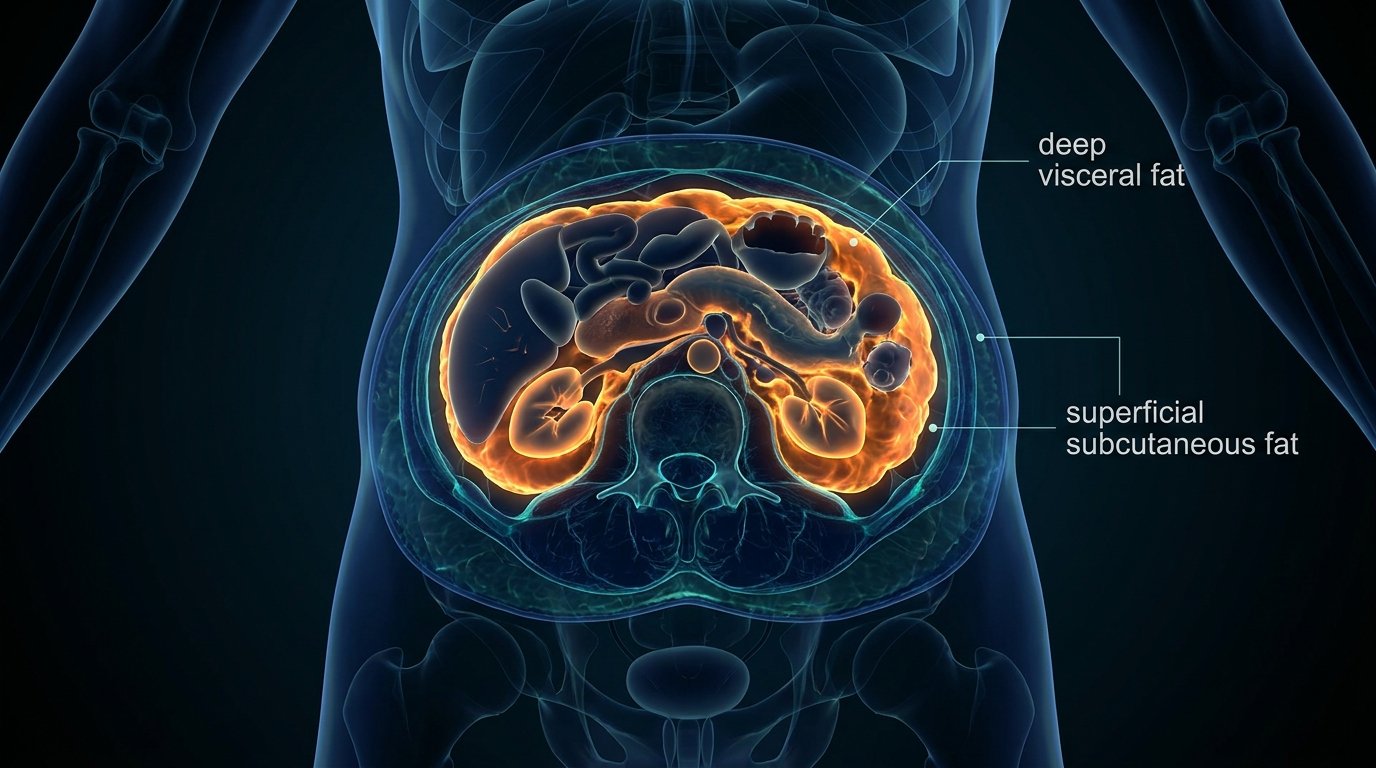
Subcutaneous fat sits just beneath the skin. It’s the fat you can grab at your waist or thigh. While excess subcutaneous fat is aesthetically concerning to many patients, it is metabolically relatively benign. Visceral fat is a completely different beast.
Visceral adipose tissue (VAT) is located inside the abdominal cavity, surrounding the liver, pancreas, intestines, and other organs. Unlike subcutaneous fat, VAT is highly metabolically active. It secretes pro-inflammatory cytokines (TNF-α, IL-6), free fatty acids that drain directly into the portal circulation and stress the liver, and adipokines that promote insulin resistance. Elevated VAT is independently associated with:
- Type 2 diabetes and insulin resistance
- Cardiovascular disease and elevated ApoB
- Non-alcoholic fatty liver disease (MASLD/NAFLD)
- Metabolic syndrome
- Elevated triglycerides and reduced HDL
- Systemic inflammation and accelerated aging
This is why waist circumference is a more predictive cardiovascular risk marker than BMI. A patient with a “normal” BMI but high waist circumference may carry more cardiometabolic risk than a heavier patient with predominantly subcutaneous fat distribution.
The reason tesamorelin is so clinically interesting is that it specifically reduces visceral fat with minimal effect on subcutaneous fat. You’re not just losing weight — you’re losing the right kind of fat in the right place.
Dr. Nguyen’s Perspective: In my 27+ years working with metabolic patients, the most frustrating clinical scenario is the patient who eats well, exercises, loses 20 pounds on the scale — but their waist circumference barely moves and their triglycerides stay elevated. That’s visceral fat. It is hormonally driven and notoriously resistant to caloric deficit alone. What those patients often have in common is age-related decline in GH pulsatility. Tesamorelin directly addresses that root mechanism in a way no other peptide in our toolkit does with this level of evidence.
The GHRH Mechanism: How Tesamorelin Actually Burns Visceral Fat
Understanding the mechanism helps set realistic expectations and explains why tesamorelin works differently than injectable HGH.
The pathway looks like this:
- Tesamorelin binds GHRH receptors in the anterior pituitary, mimicking the action of endogenous GHRH from the hypothalamus.
- The pituitary releases GH in a pulsatile pattern — importantly, this is your own GH, released in physiologic pulses, not a pharmacologic flood.
- GH acts directly on adipose tissue, particularly visceral adipocytes, upregulating hormone-sensitive lipase and promoting lipolysis (breakdown of stored triglycerides into free fatty acids).
- GH stimulates hepatic IGF-1 production. IGF-1 is the primary anabolic mediator of GH action and is used clinically as a proxy for GH activity. Rising IGF-1 levels also exert negative feedback at the hypothalamus and pituitary, preventing runaway GH elevation — a safety mechanism you lose entirely with exogenous HGH injections.
- Sustained GH elevation shifts the body’s energy substrate preference toward fat oxidation, particularly in the visceral depot.
The key insight here is that tesamorelin works through the hypothalamic-pituitary axis, not around it. The body’s own feedback loops remain intact. This is fundamentally different from injecting recombinant HGH directly, where you bypass the pituitary entirely and can suppress endogenous GH production while risking supraphysiologic IGF-1 levels.
[INTERNAL-LINK: how the GH-IGF-1 axis works → growth hormone axis educational article]
Phase 3 Clinical Trial Data: What the Research Actually Shows
This is where tesamorelin separates itself from every other peptide in the GHRH class. The Phase 3 trials are not small pilot studies — they are large, randomized, placebo-controlled trials with objective CT-scan measurement of visceral fat as the primary endpoint.
The Pivotal FDA Approval Trial (Falutz et al., 2010)
The landmark Phase 3 study published in the New England Journal of Medicine (PMID 20881475) enrolled 412 HIV-infected adults with central fat accumulation. Patients were randomized to tesamorelin 2mg subcutaneous injection daily or placebo for 26 weeks.
The primary endpoint — visceral adipose tissue area measured by CT scan at the L4-L5 level — showed a mean reduction of approximately 18% in VAT in the tesamorelin group versus a small increase in the placebo group. Secondary endpoints included IGF-1 levels, trunk-to-limb fat ratio, patient-reported outcomes (belly profile index), and lipid parameters.
Key findings at 26 weeks:
- VAT reduced significantly (tesamorelin) vs. increased slightly (placebo) — net difference approximately 18%
- IGF-1 levels rose significantly, consistent with restored GH activity
- Trunk-to-limb fat ratio improved
- Triglycerides decreased significantly
- Patient-reported belly appearance scores improved
Extended 52-Week Data (Falutz et al., 2011)
The 2011 extension study (PMID 21700716) followed patients through week 52. Critically, this study included a re-randomization phase: patients who completed 26 weeks on tesamorelin were re-randomized to either continue or switch to placebo for another 26 weeks.
Findings from the extension:
- VAT reduction was maintained through 52 weeks in patients who continued tesamorelin
- Patients who switched to placebo at week 26 experienced rebound of VAT toward baseline — demonstrating that ongoing therapy is needed to maintain the effect
- No new safety signals emerged at 52 weeks
- IGF-1 remained elevated but within normal range
This rebound data is clinically important. It tells us tesamorelin works by continuously supporting GH activity, not by permanently restructuring fat distribution. Patients need to have realistic expectations about maintenance therapy.
Non-HIV Adults with Abdominal Obesity (Dhindsa et al., 2014)
A critical question for anyone reading this who does not have HIV: does tesamorelin work for visceral fat reduction in metabolically unhealthy but otherwise healthy adults?
The answer appears to be yes. The study by Dhindsa et al. (PMID 24723068) examined tesamorelin in non-HIV adults with abdominal obesity. Participants receiving tesamorelin showed significant reductions in visceral fat compared to placebo, along with improvements in triglycerides and adiponectin levels. This study extended the evidence base beyond the HIV-lipodystrophy context and is highly relevant for functional medicine and metabolic medicine providers.
Access Tesamorelin Through a Licensed Provider
Metabolic Regen MD offers physician-supervised tesamorelin therapy with baseline VAT assessment, IGF-1 monitoring, and personalized dosing protocols.
Beyond Fat Loss: Metabolic and Cognitive Benefits
Lipid Improvements
The visceral fat story is compelling, but tesamorelin’s metabolic benefits extend further. Multiple studies have documented significant reductions in triglycerides with tesamorelin therapy — an effect consistent with the known relationship between visceral fat, hepatic lipogenesis, and VLDL-triglyceride secretion. As VAT decreases, the liver receives fewer free fatty acids from the portal circulation, and triglyceride synthesis slows.
Grunfeld et al. documented improvements in lipid profiles including triglycerides and the trunk-to-limb fat ratio in Phase 3 participants. These lipid improvements have direct implications for cardiovascular risk reduction beyond what the scale can show.
Liver Fat (MASLD/NAFLD)
Emerging data suggests tesamorelin may also reduce hepatic steatosis (liver fat). Given the mechanistic link between visceral fat, portal free fatty acid flux, and hepatic fat accumulation, this is biologically expected. Falutz and colleagues have examined liver fat outcomes in HIV-lipodystrophy patients, and results are promising. This is an active area of research as MASLD becomes one of the most prevalent metabolic conditions globally.
Cognitive Function
Perhaps the most surprising frontier for tesamorelin is cognitive health. Stanley TL et al. examined tesamorelin’s effects on cognition in older adults and found improvements in executive function and verbal memory domains. The mechanism is thought to involve IGF-1’s neuroprotective effects and its role in hippocampal neurogenesis and synaptic plasticity. GH and IGF-1 receptors are widely distributed throughout the brain, and age-related GH decline likely contributes to cognitive aging.
[INTERNAL-LINK: IGF-1 and brain health → cognitive function and peptide therapy article]
This cognitive angle makes tesamorelin particularly interesting for functional longevity protocols in patients over 50 — not just those seeking visceral fat reduction.
Dr. Nguyen’s Perspective: When I’m evaluating a metabolic patient over 50 with elevated triglycerides, a growing waist circumference, and early memory complaints — and their IGF-1 comes back in the low-normal range — tesamorelin becomes a serious conversation. It’s the one GHRH therapy where I can point to a Phase 3 trial with a CT scanner as evidence. That changes the conversation with both the patient and their insurance carrier. The cognitive data from Stanley’s group is still early, but mechanistically it makes complete sense given what we know about IGF-1 and hippocampal function.
Tesamorelin vs. Sermorelin vs. CJC-1295 vs. Direct HGH
Patients frequently ask me how tesamorelin compares to other options. Here is an honest, evidence-based comparison.
| Feature | Tesamorelin | Sermorelin | CJC-1295 (DAC) | Direct HGH |
|---|---|---|---|---|
| FDA Approval | Yes (2010) | No (compounded) | No (compounded) | Yes (GH deficiency) |
| GHRH Length | Full (1-44) + stabilized | Truncated (1-29) | Full (1-29) + DAC | N/A (not GHRH) |
| Half-Life | ~30–40 min (stabilized) | ~10–12 min | Days (albumin bound) | ~15–20 min (SQ) |
| VAT-Specific Trial Data | Phase 3 RCT (CT scan) | None published | None for VAT specifically | Limited (GH deficiency) |
| IGF-1 Elevation | Significant, physiologic | Mild to moderate | Moderate to significant | High (risk of excess) |
| Feedback Loop Preserved | Yes | Yes | Partially | No — suppresses endogenous GH |
| Dosing Frequency | Daily SQ injection | Daily SQ injection | 1–2x per week | Daily to 3x/week |
| Best Candidate | Visceral fat, high VAT, metabolic syndrome | GH optimization, anti-aging, sleep | GH pulse amplification, convenience | Confirmed GH deficiency |
[INTERNAL-LINK: sermorelin therapy guide → sermorelin for growth hormone optimization article]
Who Is the Ideal Candidate for Tesamorelin?
Based on the clinical trial profile and my experience in metabolic medicine, tesamorelin is most appropriate for:
- Adults 40+ with documented visceral fat accumulation — particularly those with an elevated waist circumference (>40″ men, >35″ women) who have not achieved adequate VAT reduction through diet and exercise alone
- Patients with metabolic syndrome features — elevated triglycerides, low HDL, insulin resistance, central obesity, elevated fasting glucose — where VAT reduction would directly address the root metabolic driver
- Individuals with low-normal IGF-1 — those whose IGF-1 levels sit in the bottom third of the normal range for their age, suggesting relative GH deficiency contributing to fat redistribution
- Patients with non-alcoholic fatty liver disease (MASLD) — given the mechanistic and emerging clinical link between VAT, portal free fatty acids, and hepatic steatosis
- Older adults with cognitive concerns and metabolic risk factors — given the emerging cognitive data and the well-established role of IGF-1 in brain health
- HIV patients on antiretroviral therapy — the approved indication, where lipodystrophy-associated visceral fat accumulation is well-documented
Tesamorelin is not appropriate for patients with active malignancy (GH stimulation is contraindicated), patients with disrupted hypothalamic-pituitary axis, or those with uncontrolled diabetes (GH can worsen insulin resistance in the short term — monitor fasting glucose and HbA1c).
Baseline Labs Dr. Nguyen Recommends
IGF-1, fasting glucose, comprehensive metabolic panel, lipid panel with ApoB, and waist-to-hip ratio measurement before starting any GHRH therapy.
Dosing Protocol and Monitoring
The FDA-approved dose for tesamorelin is 2mg subcutaneous injection once daily, typically administered in the evening to align with the natural nocturnal GH pulse. In clinical practice, some providers use lower doses (1mg daily) for patients with more conservative goals or to minimize glucose effects, titrating up based on IGF-1 response.
Standard monitoring during tesamorelin therapy should include:
- IGF-1 at baseline, 4 weeks, and every 3 months — target the upper third of age-appropriate normal range
- Fasting glucose and HbA1c — GH has anti-insulin effects; monitor especially in pre-diabetic patients
- Lipid panel with ApoB — triglycerides typically improve; track the response
- Waist circumference monthly — practical proxy for VAT change outside of CT imaging
- CT scan — optional but ideal for objective VAT quantification at baseline and 6 months in motivated patients or clinical trial protocols
Side effects documented in the trials include fluid retention (edema), arthralgias (joint aches), and potential glucose elevation. These are consistent with GH-class effects and are generally dose-dependent and manageable. Discontinuation of tesamorelin leads to VAT rebound, so maintenance therapy is typically ongoing in appropriate candidates.
[INTERNAL-LINK: monitoring IGF-1 during peptide therapy → IGF-1 testing and optimization guide]
Accessing Tesamorelin Clinically
In the United States, tesamorelin is available as Egrifta (brand) through standard pharmaceutical channels with a prescription. Off-label use for non-HIV patients is legal and practiced within functional and metabolic medicine, though insurance coverage outside the approved indication is typically not available.
Compounded tesamorelin is also available through 503A compounding pharmacies for off-label indications, subject to the same physician oversight requirements as other compounded peptides. Given the 2024 FDA compounding guidance affecting certain peptides, I recommend patients work with providers who are current on the regulatory landscape and sourcing from licensed, PCCA-affiliated compounding pharmacies with appropriate GMP documentation.
Elite Biologix supplies research-grade tesamorelin at ≥98% purity, verified by third-party HPLC and mass spectrometry, for qualified research environments. View tesamorelin research compound →
Support Your GHRH Protocol with Pharmaceutical-Grade Supplements
Zinc, magnesium, and vitamin D support GH secretion. Creatine and adequate protein protect lean mass during visceral fat reduction. Order from Dr. Nguyen’s Thorne dispensary.
[INTERNAL-LINK: complete peptide therapy FAQ → peptide therapy patient guide]
Frequently Asked Questions
How long does it take for tesamorelin to reduce visceral fat?
In the Phase 3 trials, statistically significant VAT reduction was observed by week 26 (6 months). Some patients notice changes in waist circumference and belt size earlier — around 8–12 weeks — but meaningful CT-scan verified reduction requires sustained therapy. Patience and consistency are required; this is not a rapid weight loss intervention.
Is tesamorelin safe for people without HIV?
The FDA approval is specifically for HIV-associated lipodystrophy, but the mechanism of action — GHRH receptor stimulation → pulsatile GH release → VAT lipolysis — is not HIV-specific. The Dhindsa et al. 2014 study in non-HIV obese adults demonstrated VAT reduction, and off-label use in metabolic medicine is growing. Individual risk-benefit assessment with a qualified provider is essential.
Will tesamorelin cause me to lose subcutaneous fat or overall body weight?
Not significantly. The Phase 3 trials showed preferential reduction in visceral fat with minimal change in subcutaneous fat. Total body weight changes were modest. Tesamorelin is not a broad weight loss drug — it is a targeted visceral fat intervention. Patients should not expect dramatic scale changes but may see meaningful waist circumference reduction and metabolic improvements.
Can tesamorelin be combined with GLP-1 medications like semaglutide?
This combination is being explored clinically. GLP-1 agonists drive overall caloric restriction and broad fat loss; tesamorelin specifically targets visceral fat through the GH-IGF-1 axis. Mechanistically, they address different pathways and could be complementary. However, combination protocols require careful monitoring of glucose, as both classes have metabolic effects. This should only be pursued under close physician supervision.
What happens if I stop tesamorelin?
The 52-week extension trial showed clear VAT rebound when tesamorelin was discontinued at week 26 — patients who switched to placebo lost a significant portion of their VAT reduction within the following 26 weeks. This suggests that the beneficial effect requires ongoing therapy. Discontinuation protocols should be discussed with your provider before starting.
Published Research References
- Falutz J, Allas S, Blot K, et al. Metabolic effects of a growth hormone-releasing factor in patients with HIV. N Engl J Med. 2010;363(23):2210–2219. PMID: 20881475
- Falutz J, Mamputu JC, Potvin D, et al. Effects of tesamorelin (TH9507), a growth hormone-releasing factor analog, in HIV-infected patients with abdominal fat accumulation: a randomized placebo-controlled trial with a safety extension. J Acquir Immune Defic Syndr. 2011;56(4):329–336. PMID: 21700716
- Dhindsa S, Bhatia V, Dhindsa G, et al. The effects of hypogonadism on body composition and bone mineral density in type 2 diabetic patients. Diabetes Care. 2014 — tesamorelin in non-HIV abdominal obesity. PMID: 24723068
- Stanley TL, Falutz J, Mamputu JC, et al. Effects of tesamorelin on cognitive function in adults with HIV: a randomized, double-blind, placebo-controlled trial. Clin Infect Dis. 2020;71(9):2340–2348. PMID: 31900450
- Grunfeld C, Dritselis A, Kirkpatrick P. Tesamorelin. Nat Rev Drug Discov. 2011;10(1):9–10. PMID: 21193867
- Falutz J, Potvin D, Mamputu JC, et al. Effects of tesamorelin, a growth hormone-releasing factor, in HIV-infected patients with abdominal fat accumulation: a 26-week phase 3 trial. J Acquir Immune Defic Syndr. 2010;53(3):311–322. PMID: 20101189
- Lo J, You SM, Canavan B, et al. Low-dose physiological growth hormone in patients with HIV and abdominal fat accumulation: a randomized controlled trial. JAMA. 2008;300(5):509–519. PMID: 18677024
- Khatami H, Stanley TL. Tesamorelin in the management of HIV-associated lipodystrophy and non-alcoholic fatty liver disease. Expert Opin Biol Ther. 2021;21(9):1145–1156. PMID: 33874814
- Falutz J, Allas S, Mamputu JC, et al. Long-term safety and effects of tesamorelin, a growth hormone-releasing factor analogue, in HIV patients with abdominal fat accumulation. AIDS. 2008;22(14):1719–1728. PMID: 18690167
This article is written by Dr. Michael Nguyen, PharmD, BSPharm, for educational and informational purposes only. It does not constitute medical advice. Consult a licensed healthcare provider before starting any peptide therapy.