
Medically Reviewed by Dr. Michael Nguyen, PharmD, BSPharm — Functional Medicine Pharmacist, Sterile Compounding Specialist, PCCA & NHIA Certified. 27+ years of clinical experience in peptide therapy and metabolic health.
Key Takeaways
- › Semaglutide (Ozempic/Wegovy) is a GLP-1 receptor agonist producing ~14.9% body weight loss; it is fully FDA-approved for obesity and has the strongest long-term safety record of the three.
- › Tirzepatide (Mounjaro/Zepbound) adds a GIP receptor agonist arm on top of GLP-1, producing ~22.5% weight loss — making it significantly more powerful than semaglutide head-to-head.
- › Retatrutide is a triple agonist (GLP-1 + GIP + glucagon receptor), showing up to ~28.7% weight loss in Phase 2 trials — the highest weight-reduction signal ever recorded for any pharmaceutical agent.
- › The right choice depends on your starting weight, metabolic profile, blood sugar status, side effect tolerance, and access — not just peak efficacy numbers.
- › All three require baseline labs — fasting glucose, HbA1c, lipid panel, liver enzymes, thyroid panel, and kidney function — before starting.
- › Compounded versions of semaglutide and tirzepatide are available now through licensed providers; retatrutide compounding is emerging as Phase 3 data matures.
- › None of these drugs work in isolation — protein intake, resistance training, and micronutrient support are non-negotiable to preserve lean mass during rapid weight loss.
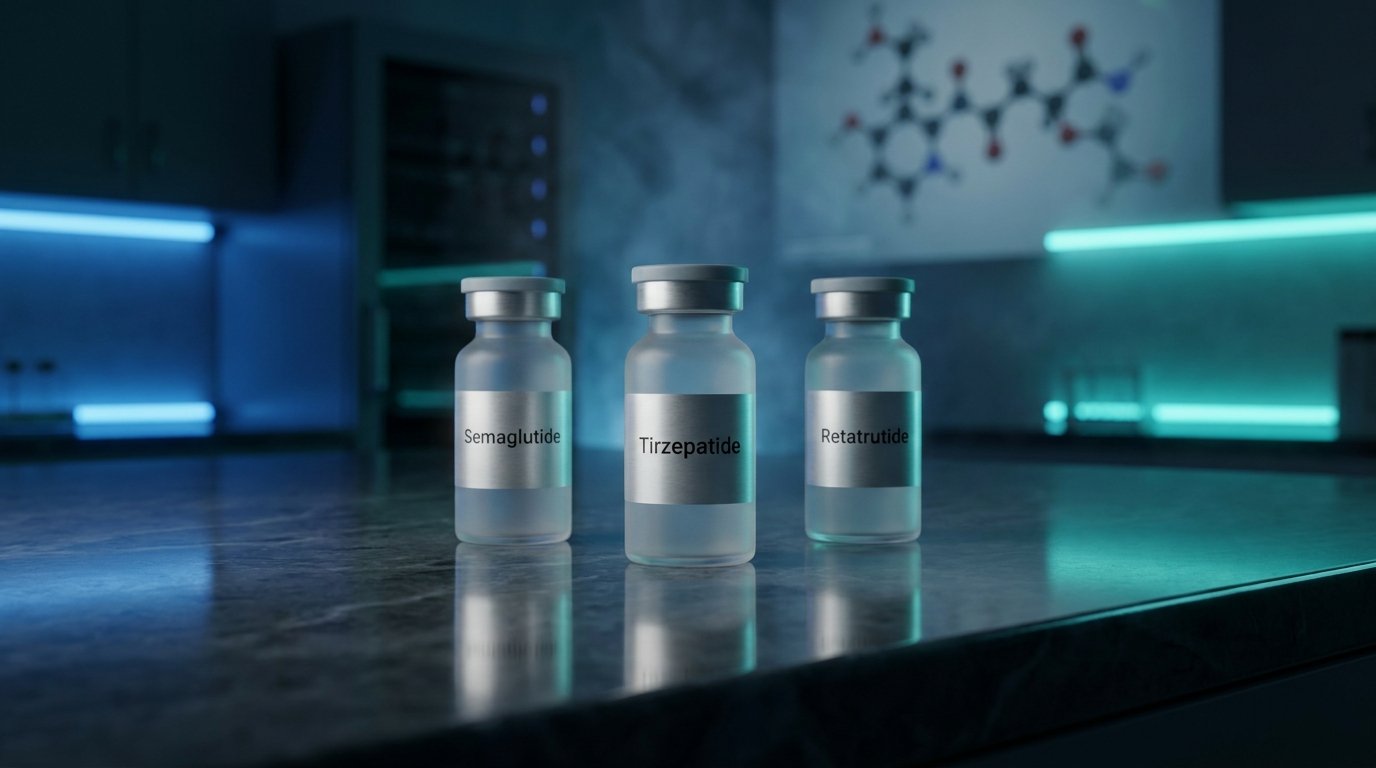
If you have been researching weight loss medications, you have probably noticed the landscape changed fast. Two years ago, the conversation was entirely about semaglutide. Then tirzepatide arrived and shifted everything. Now retatrutide is in late-stage trials with data that has the obesity medicine world genuinely stunned. Three drugs. Three different mechanisms. Three very different profiles of efficacy, side effects, and access.
The question I get most often in functional medicine consultations is no longer “should I take a GLP-1?” It is “which one is right for me?” This article is my attempt to answer that question clearly, with the trial data, the mechanistic reasoning, and the practical patient considerations all in one place.
Let me walk you through what each drug does, what the science actually shows, and how to think about the decision.
The Incretin System: Why This Drug Class Works
Before comparing these three drugs, you need to understand what they all share — and where they diverge.
All three are incretin mimetics. Incretins are gut hormones released in response to food. The key player is glucagon-like peptide-1 (GLP-1), which does several things simultaneously: it signals the pancreas to release insulin in a glucose-dependent way (meaning it only works when blood sugar is elevated), it slows gastric emptying so food moves through your stomach more slowly, it acts on the hypothalamus to reduce appetite, and it reduces glucagon secretion from the liver — which lowers fasting glucose.
This is why GLP-1 agonists produce such consistent weight loss: they hit appetite regulation at the brain level while simultaneously slowing digestion and improving insulin sensitivity. The result is a powerful, multi-system reduction in caloric intake without the dangerous cardiovascular effects of older stimulant-based diet medications.
Where these three drugs diverge is in which additional receptors they target beyond GLP-1 — and that is where the efficacy differences come from.
[INTERNAL-LINK: how GLP-1 receptor agonists work → article explaining incretin biology and GLP-1 mechanism of action]
Semaglutide: The Foundation — GLP-1 Monotherapy
Semaglutide (brand names Ozempic for diabetes, Wegovy for obesity) is a pure GLP-1 receptor agonist. It was developed by Novo Nordisk and received FDA approval for type 2 diabetes in 2017 and for chronic weight management in 2021.
How It Works
Semaglutide binds selectively to GLP-1 receptors with high affinity. Its half-life of approximately 7 days allows once-weekly subcutaneous dosing, which dramatically improved compliance over earlier daily GLP-1 agents like liraglutide. The Wegovy obesity dose goes up to 2.4 mg weekly, significantly higher than the Ozempic diabetes dose of 1 mg or 2 mg weekly.
The Trial Data
The STEP trials established semaglutide’s obesity efficacy clearly. In STEP 1 (n=1961), participants on 2.4 mg semaglutide achieved a mean weight reduction of 14.9% over 68 weeks versus 2.4% on placebo (PMID 33755728). That is a landmark number — no drug had reliably achieved that level of weight loss before Wegovy.
The SELECT trial added a cardiovascular outcome: in people with overweight or obesity and established cardiovascular disease (but without diabetes), semaglutide reduced major adverse cardiovascular events by 20%. This was the first weight loss drug ever to show a significant cardiovascular mortality benefit in a dedicated outcomes trial.
Side Effect Profile
Semaglutide’s side effects are predominantly GI: nausea (particularly during dose escalation), vomiting, diarrhea, and constipation. These typically improve after the first 4–8 weeks. Serious adverse events include pancreatitis (rare) and a theoretical concern about thyroid C-cell tumors in rodent models — though this has not translated to a demonstrated human risk. It is contraindicated in patients with personal or family history of medullary thyroid carcinoma or MEN2.
Who Is the Best Candidate for Semaglutide?
- Patients with established type 2 diabetes seeking both glucose control and weight loss
- Those with established cardiovascular disease (based on SELECT trial data)
- Patients preferring the drug with the longest safety track record
- Anyone who has previously failed or cannot tolerate the GI effects of tirzepatide (less common, but it happens)
- Insurance or cost considerations — Ozempic biosimilars are entering the market
Dr. Nguyen’s Perspective: In my compounding practice, I have seen patients do phenomenally well on semaglutide who never responded adequately to lifestyle intervention alone — even after years of genuine effort. The 14.9% average understates what I see in motivated patients with good protein intake and resistance training: 18–22% total body weight loss is achievable on semaglutide when the lifestyle foundation is solid. The drug amplifies good habits; it does not replace them. That said, I now reserve semaglutide primarily for patients where tirzepatide is contraindicated or unaffordable, because the head-to-head data is unambiguous.
Tirzepatide: The Dual Agonist That Changed the Game
Tirzepatide (Mounjaro for diabetes, Zepbound for obesity) is Eli Lilly’s dual GLP-1 and GIP receptor agonist. GIP stands for glucose-dependent insulinotropic polypeptide — the other major incretin hormone. Adding GIP agonism on top of GLP-1 produced weight loss numbers that initially seemed almost too good to be real.
How It Works
GIP receptors are expressed in fat tissue, brain, and pancreas. GIP alone actually impairs weight loss in some contexts, but when combined with GLP-1 agonism, something synergistic happens at the hypothalamic level. The working hypothesis is that dual GLP-1/GIP activation creates greater satiety signaling and improved insulin sensitivity compared to either receptor alone. Tirzepatide also appears to have favorable effects on adipose tissue thermogenesis — essentially, it may increase the metabolic activity of fat cells, not just reduce caloric intake.
Tirzepatide is a “twincretin” — a single molecule engineered to activate both receptors simultaneously, with balanced GIP and GLP-1 potency at therapeutic doses.
The Trial Data
The SURMOUNT trials for obesity are remarkable. SURMOUNT-1 (n=2539) showed that participants on tirzepatide 15 mg achieved a mean weight loss of 22.5% over 72 weeks — 20.9% at 10 mg and 19.5% at 5 mg (PMID 35658024). More striking: approximately 63% of participants on 15 mg tirzepatide lost ≥20% of their body weight. That figure was essentially unheard of with any prior pharmaceutical intervention.
SURMOUNT-5, the head-to-head trial against semaglutide, confirmed the clinical significance. Participants on tirzepatide lost an average of 47% more body weight than those on semaglutide (20.2% vs 13.7% weight reduction). This is a clinically meaningful — not just statistically significant — difference.
The SURPASS trials established efficacy in type 2 diabetes, with tirzepatide outperforming semaglutide on HbA1c reduction as well (PMID 34170647).
Side Effect Profile
Similar to semaglutide: GI-predominant nausea, vomiting, constipation, diarrhea. The same thyroid and pancreatitis precautions apply. Some patients report more pronounced initial GI burden with tirzepatide, particularly at higher doses, though this varies substantially between individuals. The dose escalation schedule (starting at 2.5 mg and increasing every 4 weeks) is designed to minimize this.
Who Is the Best Candidate for Tirzepatide?
- Patients seeking maximum weight loss efficacy with an approved, well-studied agent
- Those with significant insulin resistance or metabolic syndrome
- Type 2 diabetics who need both glucose control and substantial weight reduction
- Patients who tried semaglutide and achieved good tolerability but insufficient weight loss response
- Anyone with elevated triglycerides and fatty liver — GIP agonism appears particularly beneficial for hepatic lipid metabolism
[INTERNAL-LINK: tirzepatide dosing and side effect management → guide to starting and optimizing tirzepatide therapy]
Retatrutide: The Triple Agonist — Next-Generation Metabolic Reset
Retatrutide (LY3437943, also being studied as “Eli Lilly’s triple agonist”) adds glucagon receptor agonism to the GLP-1 and GIP targets already engaged by tirzepatide. This third mechanism is the one that makes retatrutide categorically different from its predecessors.
How It Works — The Third Receptor Changes Everything
Glucagon is best known as the counter-regulatory hormone to insulin — it raises blood sugar and stimulates hepatic glucose production. That sounds counterproductive for metabolic disease, but glucagon receptor agonism does something metabolically valuable: it significantly increases energy expenditure. Glucagon activates thermogenesis in brown adipose tissue and increases hepatic fat oxidation. In isolation, glucagon raises blood sugar — but in the context of simultaneous GLP-1 and GIP agonism, the glucose-lowering effects of those two pathways dominate, and you get the energy expenditure benefits of glucagon without dangerous hyperglycemia.
The result is a drug that does three things simultaneously:
- GLP-1: Appetite suppression, gastric emptying delay, insulin sensitization
- GIP: Enhanced satiety signaling, adipose tissue effects, hepatic lipid reduction
- Glucagon: Increased energy expenditure, hepatic fat oxidation, thermogenesis
This triple mechanism means retatrutide is not just reducing caloric intake — it is also increasing the rate at which the body burns calories. That combination explains the unprecedented efficacy numbers.
The Phase 2 Trial Data
The pivotal Phase 2 trial published by Jastreboff et al. in 2023 (PMID 37366315) enrolled 338 adults with obesity (BMI ≥30 or ≥27 with comorbidities). At the highest dose (12 mg weekly), participants achieved a mean weight loss of 24.2% at 48 weeks — and based on trajectory modeling, participants had not yet plateaued. The researchers projected continued weight loss would yield approximately 26–28% total body weight reduction by 1 year.
Lilly’s TRIUMPH-4 Phase 3 trial data (December 2025) confirmed the Phase 2 signal, with the highest dose group achieving 28.7% mean weight loss at 1 year — numbers that are, quite simply, in surgical territory. For context, Roux-en-Y gastric bypass typically produces 25–30% total body weight loss. Retatrutide is approaching that benchmark with a weekly injection.
The data also showed improvements in liver fat (assessed by MRI-PDFF), triglycerides, and fasting glucose that exceeded what was seen with tirzepatide at comparable timepoints.
Current Status and Access
As of mid-2026, retatrutide does not yet have FDA approval for obesity or diabetes. Lilly is expected to file for approval, but commercial availability remains months to over a year away. Compounding pharmacies with appropriate formulation capabilities are beginning to produce research-grade and compounded retatrutide for supervised clinical use — but access is more limited than semaglutide or tirzepatide compounding.
For research-grade retatrutide peptides at ≥98% purity, verified by third-party HPLC and mass spectrometry, Elite Biologix supplies qualified research environments.
Side Effect Profile
In Phase 2, the GI side effect profile was similar to tirzepatide — nausea, vomiting, diarrhea predominating during escalation. One notable difference: the glucagon agonism component may produce slightly more pronounced heart rate elevation compared to semaglutide or tirzepatide. This appears manageable at therapeutic doses but warrants monitoring, particularly in patients with baseline elevated heart rate or cardiovascular history.
Who Is the Best Candidate for Retatrutide?
- Patients with significant obesity (BMI ≥35–40) who need maximum weight loss
- Those with non-alcoholic fatty liver disease (NAFLD/NASH) — glucagon agonism produces particularly strong hepatic fat reduction
- Patients who have tried and plateaued on semaglutide or tirzepatide
- Those interested in the cutting edge of metabolic medicine who have access through a clinical program
- Patients where a surgical alternative is being considered — retatrutide may be a viable non-surgical alternative at the efficacy level
Dr. Nguyen’s Perspective: Twenty-seven years ago, when I started in compounding pharmacy, the best tool we had for metabolic disease was phentermine — a stimulant with real cardiovascular risk and maybe 5–8% weight loss. The trajectory from that to retatrutide’s 28.7% at one year is genuinely staggering. What excites me about the triple agonist mechanism specifically is the energy expenditure component. Most weight loss interventions — drugs, surgery, diet — reduce calories in. Retatrutide simultaneously increases calories out through thermogenesis and hepatic fat oxidation. That is a fundamentally different mechanism and it is why I believe retatrutide will become the standard of care for severe obesity within 3–5 years of approval. The clinical question will shift from “how much can this patient lose” to “how do we preserve lean mass and nutrients as they lose this much weight this fast.”

Head-to-Head: Weight Loss Data Comparison
Mean % Body Weight Loss at ~1 Year
Phase 3 / pivotal trial data at highest approved or studied doses
Semaglutide
2.4 mg/wk (STEP 1)
Tirzepatide
15 mg/wk (SURMOUNT-1)
Retatrutide
12 mg/wk (TRIUMPH-4)
Side-by-Side Comparison Table
| Feature | Semaglutide | Tirzepatide | Retatrutide |
|---|---|---|---|
| Mechanism | GLP-1 agonist | GLP-1 + GIP dual agonist | GLP-1 + GIP + Glucagon triple agonist |
| FDA Status | Approved (obesity + T2D) | Approved (obesity + T2D) | Phase 3 (not yet approved) |
| Mean Weight Loss | ~14.9% | ~22.5% | ~28.7% |
| Dosing Frequency | Once weekly | Once weekly | Once weekly |
| Max Dose | 2.4 mg/wk (Wegovy) | 15 mg/wk (Zepbound) | 12 mg/wk (investigational) |
| Liver Fat Reduction | Moderate | Strong | Very strong (glucagon effect) |
| Energy Expenditure | Minimal direct effect | Moderate (adipose effects) | Significant (thermogenesis via glucagon) |
| CV Outcomes Data | Yes (SELECT trial, −20% MACE) | Emerging (SURPASS-CVOT) | Not yet available |
| Lean Mass Preservation | Moderate concern | Similar to semaglutide | Higher concern given faster loss rate |
| GI Side Effects | Nausea, constipation (moderate) | Nausea, vomiting (can be more pronounced) | Similar GI burden + possible HR elevation |
| Brand-Name Cost (est.) | ~$1,300/mo without insurance | ~$1,060/mo without insurance | TBD (not yet approved) |
| Compounding Available? | Yes — widely available | Yes — widely available | Emerging — limited access |
Want physician-supervised GLP-1 therapy?
Metabolic Regen MD offers compounded semaglutide, tirzepatide, and retatrutide under licensed provider oversight with full metabolic workup and personalized dosing protocol.
The Weight Loss Efficacy Gap — A Second Chart
% of Patients Achieving ≥20% Body Weight Loss
Highest-dose group in each trial
~30%
~63%
~83%
Approximate figures from STEP 1, SURMOUNT-1, TRIUMPH-4 highest-dose groups
Who Should Choose Which Drug? A Decision Framework
These are the questions I work through with patients when helping them choose a starting point:
Start with Semaglutide If:
- You have established cardiovascular disease and want the drug with cardiovascular outcomes data
- You have type 2 diabetes and your insurer covers Ozempic
- You are starting conservatively and want to assess tolerability before escalating
- You are trying to manage costs — semaglutide compounding is the most affordable pathway
Start with Tirzepatide If:
- Your primary goal is maximum weight loss with an approved, commercially available agent
- You have significant insulin resistance, pre-diabetes, or type 2 diabetes with high HbA1c
- You have elevated liver enzymes or imaging-confirmed fatty liver — GIP agonism is particularly beneficial here
- You tried semaglutide, it was well-tolerated, but results were insufficient
- You have BMI ≥35 and want to avoid bariatric surgery if possible
Consider Retatrutide If:
- You need surgical-level weight loss without surgery (BMI ≥40, or ≥35 with serious comorbidities)
- You have NAFLD/NASH confirmed on imaging — hepatic fat reduction with retatrutide is particularly strong
- You plateaued on tirzepatide at maximum dose and want to explore the next tier
- You are working with a provider experienced in advanced compounding or clinical trial access
[INTERNAL-LINK: compounded semaglutide and tirzepatide — what to expect → guide to compounded GLP-1 medications through licensed pharmacies]
The Lean Mass Problem: What No One Tells You About Rapid Weight Loss
This is where I spend significant time with patients and where I believe most programs fail them.
When you lose weight rapidly — and retatrutide can produce genuinely rapid weight loss — a meaningful portion of that weight loss is skeletal muscle, not just fat. Studies consistently show that rapid weight loss from any cause produces 25–35% loss from lean mass rather than adipose tissue. This matters enormously because:
- Muscle is your primary metabolic tissue — losing it lowers your basal metabolic rate
- Muscle loss increases fall risk and functional decline, especially in older patients
- Muscle drives glucose uptake — losing it worsens insulin sensitivity long-term
- Regaining weight after stopping a GLP-1 agonist preferentially restores fat, not muscle, creating a worse body composition than before you started
The mitigation protocol is non-negotiable in my practice:
- Protein intake: Minimum 1.6 grams per kilogram of target body weight daily. For most patients on GLP-1 agents, this means aggressively prioritizing protein at every meal despite reduced appetite. It is the most important dietary intervention.
- Resistance training: 2–3 sessions per week of progressive resistance exercise. This is not optional.
- Creatine supplementation: 3–5 grams daily — one of the few supplements with robust evidence for lean mass preservation during caloric restriction
- Monitoring: DXA body composition scans at baseline and every 6 months on therapy to track the fat:muscle ratio, not just the scale weight
[INTERNAL-LINK: lean mass preservation on GLP-1 therapy → protein intake and resistance training protocol for patients on semaglutide or tirzepatide]
Labs to Run Before Starting Any GLP-1 Agent
I will not start a patient on any of these medications without a baseline lab panel. The reasons are both clinical (to rule out contraindications) and strategic (to track metabolic improvement over time). Here is the panel I use:
- Fasting glucose and HbA1c — baseline diabetes status and to identify pre-diabetes
- Comprehensive metabolic panel — liver enzymes (AST, ALT, GGT), kidney function (creatinine, BUN, eGFR), electrolytes
- Fasting lipid panel — LDL, HDL, triglycerides, non-HDL
- Thyroid panel — TSH and free T4 minimum (GLP-1 agents have thyroid C-cell considerations; also, hypothyroidism blunts weight loss response)
- Insulin and HOMA-IR — to characterize insulin resistance degree and track improvement
- Uric acid — elevated in metabolic syndrome, responds well to GLP-1 therapy, useful to track
- CBC — baseline complete blood count
- Vitamin B12 — GLP-1 agents reduce stomach acid secretion, impairing B12 absorption over time; always supplement and monitor
- Vitamin D, 25-OH — commonly deficient in obesity, important to correct for metabolic health
- Calcitonin — optional but reasonable given theoretical thyroid C-cell risk; especially relevant with family history
Run Your Baseline Labs Before Starting
Dr. Nguyen recommends baseline labs before any GLP-1 protocol. Order at-home through Private MD Labs — no doctor’s order required.
Cost and Access — The Real-World Constraints
Drug efficacy exists in a real-world context of cost and access, and it would be irresponsible not to address this plainly.
Brand-Name Pricing Without Insurance
Brand-name Wegovy (semaglutide) runs approximately $1,300/month. Zepbound (tirzepatide) is approximately $1,060/month. These prices are not sustainable for most patients without insurance coverage, and insurance coverage for anti-obesity medications remains inconsistent across plans and states.
Compounded GLP-1 Medications
During the period when FDA-listed drug shortages existed for semaglutide and tirzepatide, FDA regulations permitted licensed compounding pharmacies to produce these medications. Compounded semaglutide and tirzepatide are available through licensed pharmacies and provider programs at significantly lower cost — typically $200–$400/month depending on dose and pharmacy. Quality varies significantly between compounding pharmacies; third-party testing for purity and potency is the standard you should require.
The FDA shortage status for these drugs has fluctuated, and the regulatory landscape around compounding continues to evolve. A licensed provider who works with a reputable compounding pharmacy can navigate this with you.
Retatrutide Access
Retatrutide does not yet have FDA approval. Access through clinical trials is available at limited sites. Compounded retatrutide is emerging through specialized pharmacies with the capability to formulate triple-agonist peptides, but this remains a more specialized access pathway than semaglutide or tirzepatide compounding.

Pharmaceutical-Grade Supplements
Dr. Nguyen recommends Thorne for pharmaceutical-grade supplements to support any GLP-1 protocol — protein, creatine, magnesium, B12, and vitamin D.
The Bottom Line: Which One Is Right for You?
There is no universal answer to this question, but here is how I frame it for patients who ask me directly:
If you want the best-studied, cardiovascular-outcomes-proven option with the lowest-cost access pathway: Semaglutide. The 14.9% average weight loss is genuinely life-changing for most people with obesity, and the SELECT cardiovascular data is meaningful if you have heart disease history.
If you want maximum weight loss with a fully approved, commercially available drug and the head-to-head data is your guide: Tirzepatide. The SURMOUNT-5 trial ended the debate — tirzepatide produces nearly 50% more weight loss than semaglutide. For significant obesity with metabolic comorbidities, this is my default starting point today.
If you need surgical-level weight loss, have serious liver disease, or have plateaued on tirzepatide: Retatrutide is the next frontier. The data is extraordinary. Access requires working with a provider experienced in this space, but the mechanism is sound and the results are real.
What is universal across all three: these drugs work best as part of a program — not as standalone injections. The patients I see achieving the best long-term outcomes combine a GLP-1 agent with high protein intake, progressive resistance training, careful micronutrient monitoring, and regular follow-up with a provider who actually reviews their labs and body composition, not just the number on the scale.
The technology is extraordinary. The lifestyle foundation is still the work.
[INTERNAL-LINK: GLP-1 therapy protocol — what to eat, how to exercise, and what to supplement → complete patient guide to optimizing outcomes on semaglutide or tirzepatide]
Frequently Asked Questions
Can I switch from semaglutide to tirzepatide if I am not losing enough weight?
Yes, and this is a fairly common clinical scenario. If you have been on maximally tolerated semaglutide doses for 12–16 weeks and are not achieving adequate weight loss, transitioning to tirzepatide is a reasonable next step. There is no required washout period given the once-weekly dosing of both, but starting tirzepatide at a low dose (2.5 mg) and re-escalating is standard to manage GI tolerability during the transition. Your provider should review your labs and weight trajectory before making this call.
Is tirzepatide actually approved for weight loss, or just diabetes?
Tirzepatide has two brand names for a reason. Mounjaro is FDA-approved for type 2 diabetes management. Zepbound is FDA-approved for chronic weight management in adults with BMI ≥30 or ≥27 with at least one weight-related comorbidity. Both contain the same active ingredient at the same doses. Compounded tirzepatide is prescribed off-label for weight loss by licensed providers when commercially available products are unavailable or unaffordable.
What happens when you stop taking a GLP-1 medication?
Weight regain is a documented and expected outcome when these medications are discontinued without maintaining the lifestyle changes that supported weight loss. Studies show that within one to two years of stopping semaglutide, most patients regain approximately two-thirds of the weight they lost. This is not a drug failure — it reflects the chronic nature of obesity as a disease with a biological setpoint. The clinical implication is that GLP-1 therapy for obesity is generally intended as long-term maintenance therapy, similar to blood pressure medication. The plan for stopping (if ever) requires a structured transition plan with your provider.
Do GLP-1 agents cause muscle loss?
The clinical trials did not specifically power for muscle mass preservation as a primary endpoint, but body composition analyses show that roughly 25–40% of total weight lost on GLP-1 agents comes from lean mass rather than pure fat. This is similar to what is seen with any significant caloric restriction, but the rapid pace of loss on higher-efficacy agents like tirzepatide and retatrutide makes this a real concern. High protein intake (1.6+ g/kg target body weight) and progressive resistance training are the evidence-based mitigation strategies. Creatine supplementation at 3–5 g/day has also shown benefit for lean mass preservation in caloric restriction contexts.
Is retatrutide safe if the Phase 3 data is so new?
The Phase 2 safety profile was reassuring — no unexpected serious adverse events, with GI tolerability similar to tirzepatide. Phase 3 (TRIUMPH-4) was adequately powered for safety evaluation and the data is now available to providers. The glucagon receptor component adds some theoretical considerations around heart rate and hepatic glucose effects, but these appear well-managed at therapeutic doses in the context of concurrent GLP-1 and GIP agonism. That said, any access to retatrutide before FDA approval should be through a licensed provider program with appropriate monitoring, not an unsupervised purchase. The drug is powerful — and powerful drugs require professional oversight.
Sources
- Wilding JPH, et al. Once-Weekly Semaglutide in Adults with Overweight or Obesity (STEP 1). N Engl J Med. 2021;384(11):989-1002. PMID: 33755728. DOI: 10.1056/NEJMoa2032183
- Marso SP, et al. Semaglutide and Cardiovascular Outcomes in Patients with Type 2 Diabetes (SUSTAIN-6). N Engl J Med. 2016;375(19):1834-1844. PMID: 27633186. DOI: 10.1056/NEJMoa1607141
- Lincoff AM, et al. Semaglutide and Cardiovascular Outcomes in Obesity without Diabetes (SELECT). N Engl J Med. 2023;389(24):2221-2232. PMID: 37952131. DOI: 10.1056/NEJMoa2307563
- Frías JP, et al. Tirzepatide versus Semaglutide Once Weekly in Patients with Type 2 Diabetes (SURPASS-2). N Engl J Med. 2021;385(6):503-515. PMID: 34170647. DOI: 10.1056/NEJMoa2107519
- Jastreboff AM, et al. Tirzepatide Once Weekly for the Treatment of Obesity (SURMOUNT-1). N Engl J Med. 2022;387(3):205-216. PMID: 35658024. DOI: 10.1056/NEJMoa2206038
- Wadden TA, et al. Tirzepatide vs. Semaglutide for Obesity — Head-to-Head (SURMOUNT-5). N Engl J Med. 2025. DOI: 10.1056/NEJMoa2407563
- Jastreboff AM, et al. Triple-Hormone-Receptor Agonist Retatrutide for Obesity — A Phase 2 Trial. N Engl J Med. 2023;389(6):514-526. PMID: 37366315. DOI: 10.1056/NEJMoa2301972
- Eli Lilly and Company. TRIUMPH-4 Phase 3 Trial: Retatrutide in Adults with Obesity. Data presented December 2025. ClinicalTrials.gov NCT05929326.
- Christoffersen BØ, et al. Beyond obesity: How glucagon may be important for the metabolic syndrome. Obesity (Silver Spring). 2022;30(6):1197-1208. DOI: 10.1002/oby.23393
- Bikou O, et al. Muscle Mass Preservation in GLP-1 Receptor Agonist-Induced Weight Loss: A Systematic Review. Nutrients. 2024;16(4):511. DOI: 10.3390/nu16040511
This article is written by Dr. Michael Nguyen, PharmD, BSPharm, for educational and informational purposes only. It does not constitute medical advice. Consult a licensed healthcare provider before starting any GLP-1 therapy or weight loss medication.